

1000
Customer Reviews
24-7 Emergency Service in Philadelphia, Bucks, and Montgomery County


Clogged vs. Slow-Draining Sinks: What Each One Tells You About Your Plumbing
A sink that won’t drain is frustrating. But knowing why it’s not draining can mean the difference between a simple fix and an expensive repair you didn’t see coming.
At Bill Frusco Plumbing and Heating, we’ve been diagnosing drain problems in Philadelphia, Bucks County, and Montgomery County since 1967. Here’s what we see on service calls every week, and what each type of drain problem is telling you.
TL;DR
A slow-draining sink and a fully clogged drain are two different problems with two different causes. Slow drains usually signal buildup in progress. Full clogs mean the blockage is already there.
Key Takeaways
- Multiple slow drains in your home point to a deeper main line issue
- DIY fixes work for surface-level buildup; anything deeper needs a professional drain cleaning service
What a Slow Drain Is Telling You
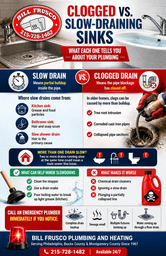
When water pools in your sink and takes a minute to clear, most homeowners chalk it up to a minor plumbing problem and move on. But a slow drain almost always means partial buildup inside the pipe. Left alone, that partial blockage becomes a full one.
If you’re asking yourself, “Why is my drain draining slowly?”, the location matters:
- Kitchen sink: Grease and food particles are the most common culprits.
- Bathroom sink: Hair and soap scum collect around the stopper and just below the drain opening.
- Slow shower drain causes: Hair is almost always the primary cause.
What a Fully Clogged Drain Means
A drain backing up means the pipe blockage has closed off. At that point, the question isn’t whether you need help. It’s how quickly you can get it.
In older homes throughout Philadelphia and the surrounding counties, we find that clogs aren’t just from household buildup. Tree root intrusion, corroded cast iron pipes, and collapsed sections are real possibilities in homes built before the 1980s. What looks like a routine clogged drain repair sometimes reveals a more serious underlying issue.
That’s why we don’t just clear the clog: we find out what caused it.
When One Slow Drain Becomes a Bigger Plumbing Problem
Here’s what separates a localized drain issue from a whole-house plumbing emergency: the number of drains affected.
One slow drain is likely isolated buildup, but two or more drains running slow at the same time is likely a main sewer line issue, and it needs to be treated as one. Ignoring it is how a drain cleaning service call turns into an emergency excavation.
How to Unclog a Drain: What Works and What Makes It Worse
At Bill Frusco Plumbing and Heating, we get asked about DIY plumbing tips constantly. Here’s our honest take after more than 50 years in the trade.
| What can help minor slowdowns: | What makes it worse: |
| Removing and cleaning the stopper manually | Chemical drain cleaners used repeatedly |
| Using a drain snake for surface-level hair clogs | Ignoring a slow drain until it becomes a full backup |
| Pouring boiling water down a kitchen drain to break up light grease buildup | Plunging a drain connected to a partially collapsed line |
If basic steps don’t resolve a slow-draining sink within a day or two, it’s time to call a plumber before the situation escalates.
When to Call an Emergency Plumber
Some drain problems can’t wait for a scheduled appointment. Call for emergency plumber service immediately if you notice:
- Complete drain backup with no movement at all
- Sewage smell coming from drains or near the foundation
- Multiple fixtures backing up at the same time
- Water coming up through a floor drain
Bill Frusco Plumbing and Heating provides 24/7 emergency service throughout Philadelphia, Bucks County, and Montgomery County. We’ve been the region’s go-to for clogged pipe repair for three generations.

FAQs
What’s the difference between a slow drain and a clogged drain?
A slow drain means water is still moving but restricted. A clogged drain means flow has stopped entirely, and a pipe blockage is fully in place. Both need attention, but a clog is more urgent and typically requires professional clogged drain repair rather than a DIY fix.
Why are multiple drains in my home running slowly at the same time?
When several drains slow down simultaneously, it almost always points to a problem in the main sewer line rather than individual drain lines. This can result from grease accumulation, tree root intrusion, or a structural issue in the pipe.
Can I use chemical drain cleaners on slow drains?
Chemical drain cleaners can offer temporary relief for minor buildup, but they’re not a long-term solution. If you find yourself reaching for drain cleaner more than once every few months, the underlying plumbing problem needs a proper diagnosis.
How often should I have my drains professionally cleaned?
Most plumbers recommend professional drain cleaning every one to two years for average households. Staying ahead of buildup is almost always less expensive than clogged pipe repair after a full blockage develops.
Schedule Drain Service with Bill Frusco Plumbing and Heating
Whether you’re dealing with a slow-draining sink that’s been bothering you for weeks or a drain backing up right now, Bill Frusco Plumbing and Heating is ready to help.
As a third-generation, master-licensed plumbing contractor serving Philadelphia, Bucks County, and Montgomery County since 1967, we offer free estimates, honest pricing, and workmanship that’s always guaranteed. Schedule service online or call us anytime—we’re available 24/7.